
Decorating With Vintage Flour Sacks Without Cutting Them
Vintage flour sacks are one of those everyday, common pieces of history that quietly carry the story of earlier generations.
They were a practical part of daily life, reused again and again in kitchens and sewing rooms. Today they are finding their way back into our homes.
If you enjoy cottage decor and vintage fabrics, flour sacks are a fun way to add color and authentic vintage character. Their eye-catching graphics are no longer produced.
My Vintage Flour Sack Auction Find
This vintage flour sack post has been nearly a decade in the making.
During the farmhouse decorating trend, grain sack and drop cloth projects were everywhere. I was right there using reproduction fabric and painted drop cloth. But what I really wanted was authentic vintage flour sacks.
My mom made play clothes for my older brothers from flour sacks when they were young, but I had never seen one myself.
A couple of months ago, I spotted two real flour sacks in a shop display, but they weren’t for sale. Such a tease.
I knew they were still around in the U.S., but when I realized I might find some closer to home, I had to try.
I eventually found a group of them in an auction.
Instead of heading somewhere warm for a winter vacation, we drove 700 kilometers each way to pick them up. We turned it into a bit of an antique trip along the way.
But the truth is, I left home for those flour sacks.
Why Vintage Flour Sacks Matter
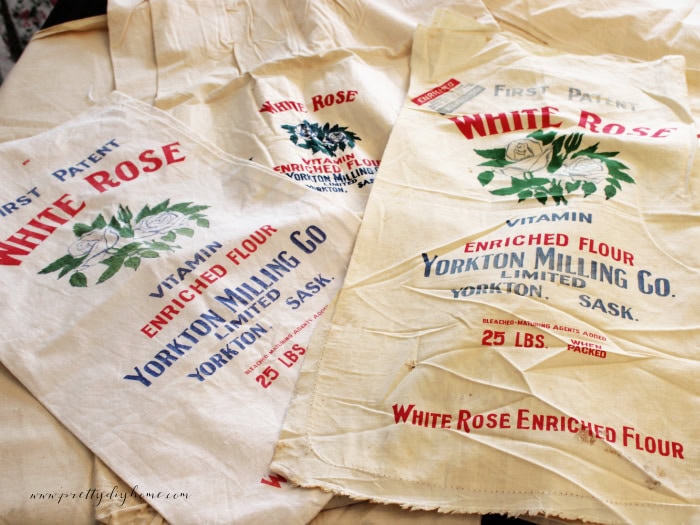
Some of the sacks are a little yellowed with age, but the cotton is still strong, and many of the original graphics are surprisingly clear.
Pieces like these are part of a larger tradition of vintage fabrics that were made to be used, reused, and appreciated for their practicality.
Flour sacks like these were common in North American kitchens from the late 1800s through the mid-1900s. Once the flour was gone, the sturdy cotton sacks were washed and reused around the home for everything from dish towels to children’s clothing.
Canadian flour mills eventually discovered that many women preferred sacks with minimal printing, as they were easier to reuse as fabric.
I’ll come back to that when we get to cleaning them.
Because of that, sacks with bright, colorful graphics are actually less common. I was thrilled to find that several in this lot still have their original printing.
That history is part of what makes these old textiles so special to me, and why I prefer to decorate with vintage flour sacks without cutting them.
How to Clean Vintage Flour Sacks
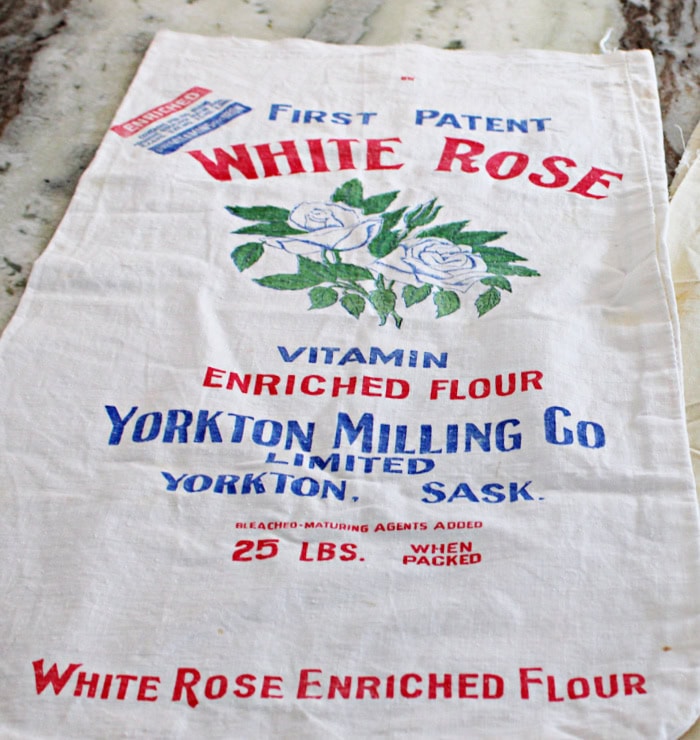
I had several sacks in different conditions, brands, and stages of wear. Some were almost like new, while others were dusty or had clearly been used as tea towels, with only a faint hint of the original graphics remaining.
I chose one of the sacks to test first, and I’m glad I did.
I filled a tub with warm water and a bit of dish soap and placed one flour sack in it. It had blue lettering, and the dye began to run almost immediately. It may have been an indigo-based ink.
I pulled it out of the water right away and rinsed it under cold tap water, which helped remove most of the bleeding dye.
What surprised me even more was what happened when I hung it up to dry.
I realized the graphics weren’t printed directly onto the fabric. Instead, they were on a very thin, almost paper-like layer that began to lift right off.
This may have been one way mills responded to women wanting the fabric plain, although I’m not entirely sure.
When it comes to cleaning vintage flour sacks, less is more.
Of course, you don’t want anything dirty hanging in your kitchen, but if you can spot clean them instead of fully washing, it will help preserve the graphics.
Every sack is a little different depending on the brand, age, and how it was printed, so it’s important to be cautious. After my test, I would not recommend tossing them straight into the washing machine.
But the fabric itself is unbelievably thick, finely woven, and strong.
Because they had been packaged for so long, the sacks were quite creased. I did not want to spray them directly with water, so I used a damp cloth and ironed over it using a hot iron on the linen setting.
I avoided the sections where I had discovered that paper-like layer over the graphics, and it worked very well.
Decorating With Vintage Flour Sacks Without Cutting Them
One of the reasons I was so excited to find these vintage flour sacks is that they are beautiful just as they are. The aged cotton, simple printing, and soft texture make them easy to incorporate into vintage kitchen decor without altering them in any way.
Because of their history, I prefer to decorate with them without cutting or repurposing the fabric. Instead, I simply fold, layer, or drape them so the original textile can still be appreciated.
Used as Simple Clip Curtains
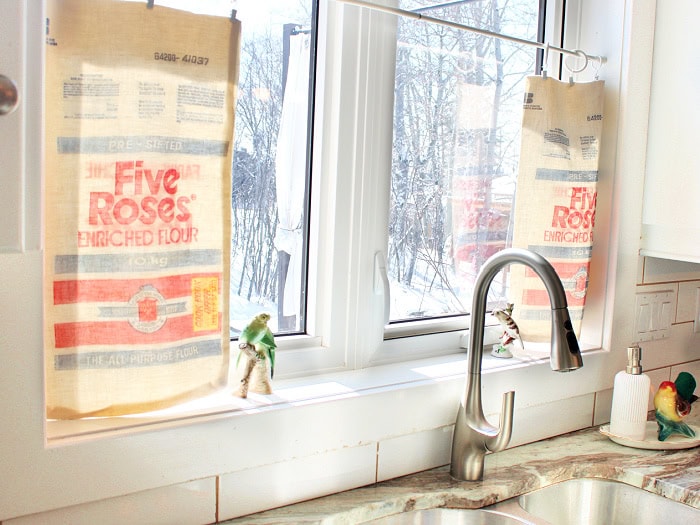
I let the flour sacks dictate where I used them. Two identical 20 lb sacks quickly became kitchen curtains.
I chose them because they matched, which worked perfectly for this.
I simply folded them over at the top and hung them from my curtain rod using clips. It was an easy way to use them without sewing. The graphics are cheerful and eye-catching, and the picture shows just how heavy and strong the fabric is.
Used to Cover Open Storage
I also had a very large open 100 lb Robin Hood flour sack. I folded it the same way and used it as a curtain to cover the cubby section of my kitchen cupboards.
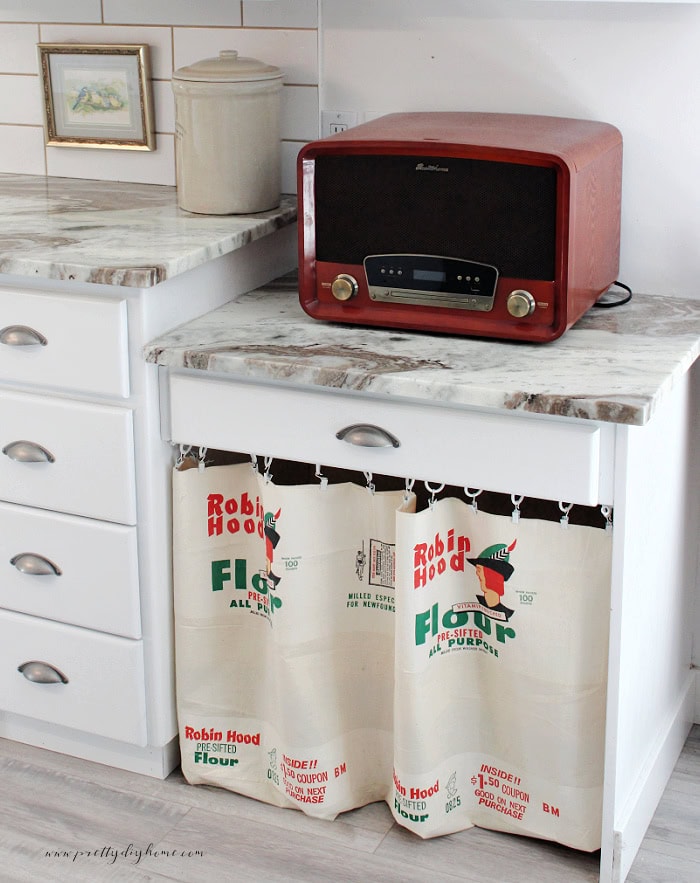
It hides my flour and sugar bins while still letting me enjoy seeing the large, colorful Robin Hood emblem every day.
Used as a Table Runner
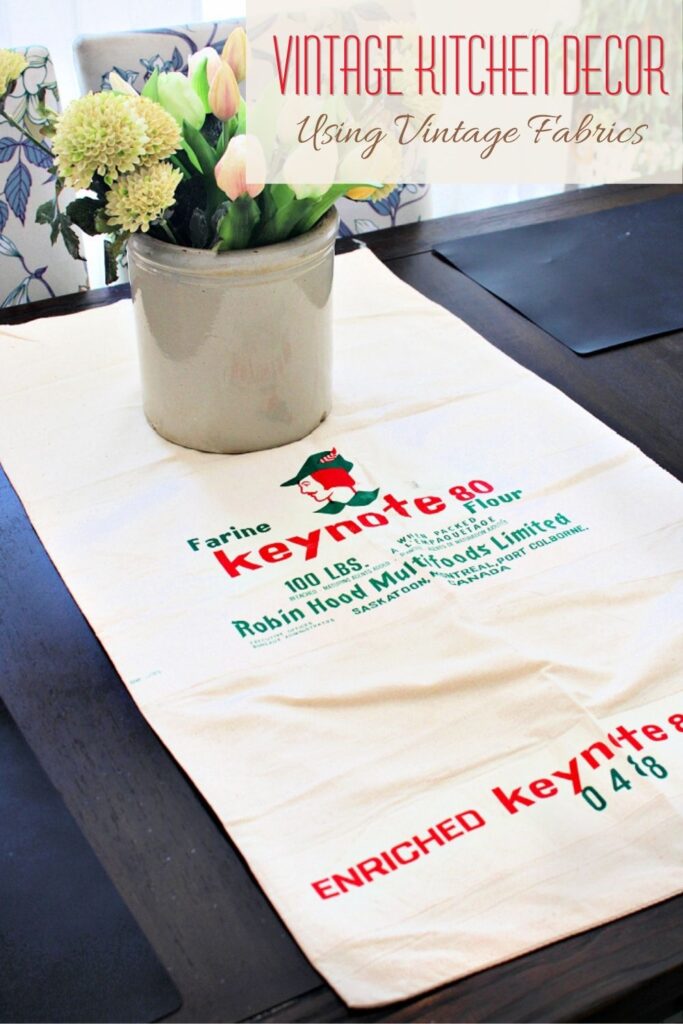
I used an intact 100 lb flour sack with bright Robin Hood graphics as a table runner, pairing it with a vintage crock and some spring flowers.
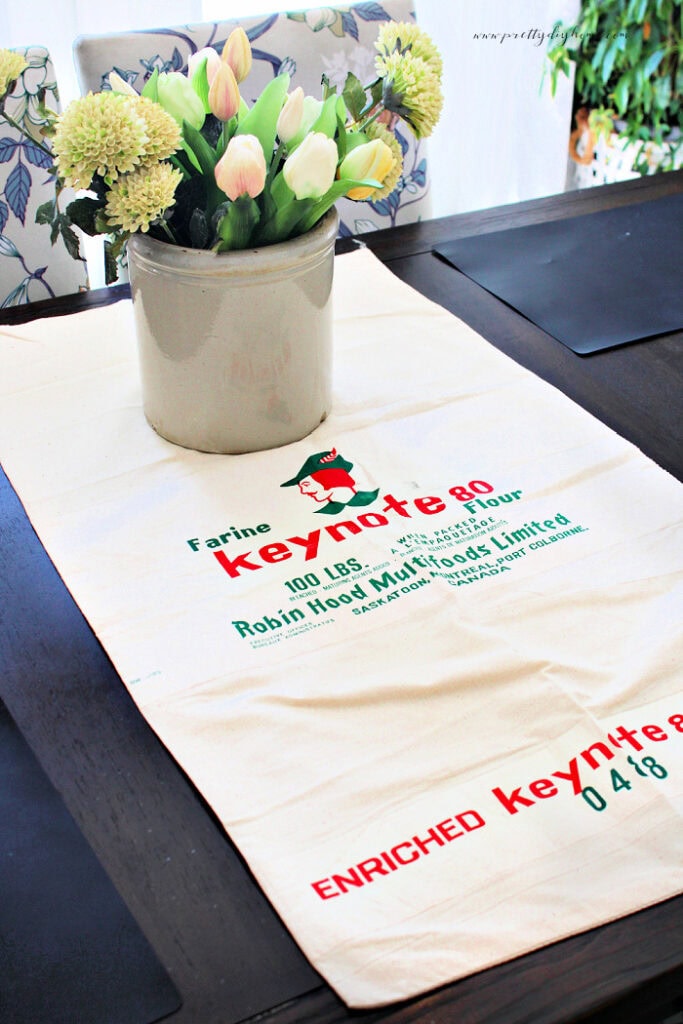
The bold graphics add a bit of color, while the cotton fabric keeps the look soft and casual.
Used as a Tea Towel
Flour sacks can easily be styled the same way you would use a tea towel for decorating.
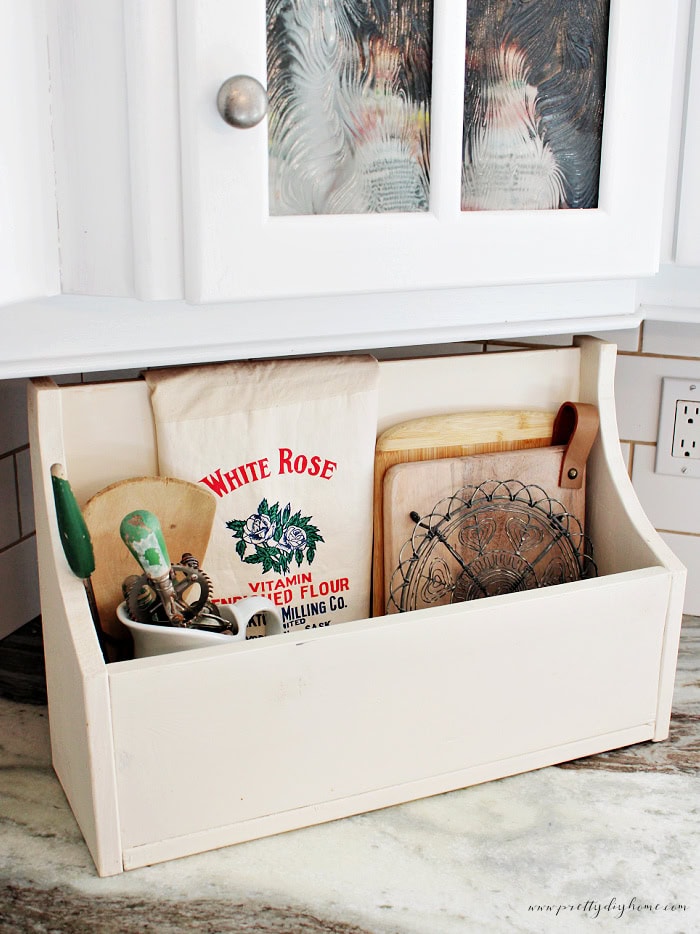
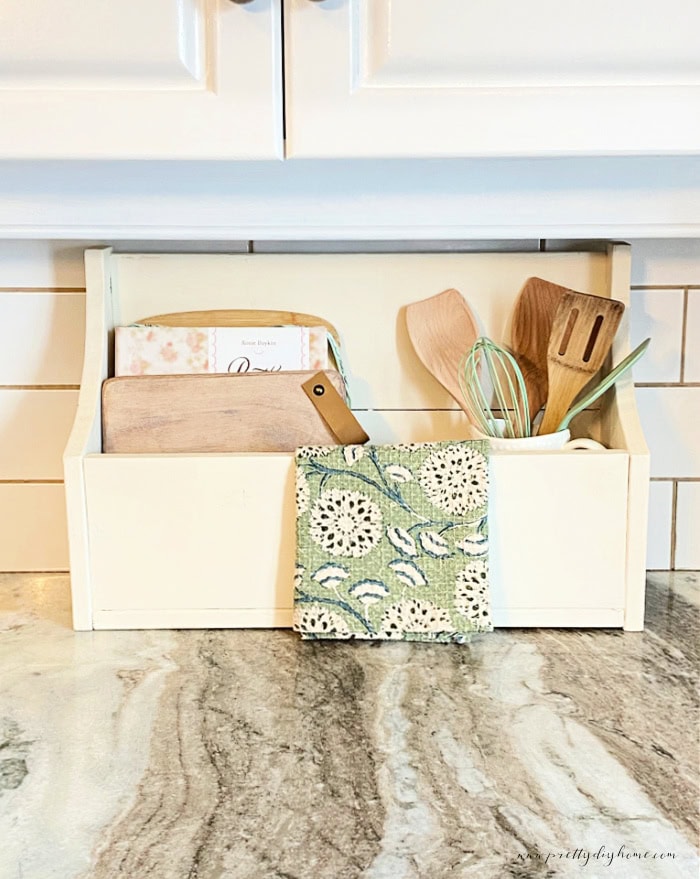
I folded one and draped it over the back of my kitchen organizer to add a bit of color and softness.
You could also drape them across a cutting board, hang them from an accordion rack, or fold them over the edge of a bowl, crock, or oven door handle.
Used as Basket Decor
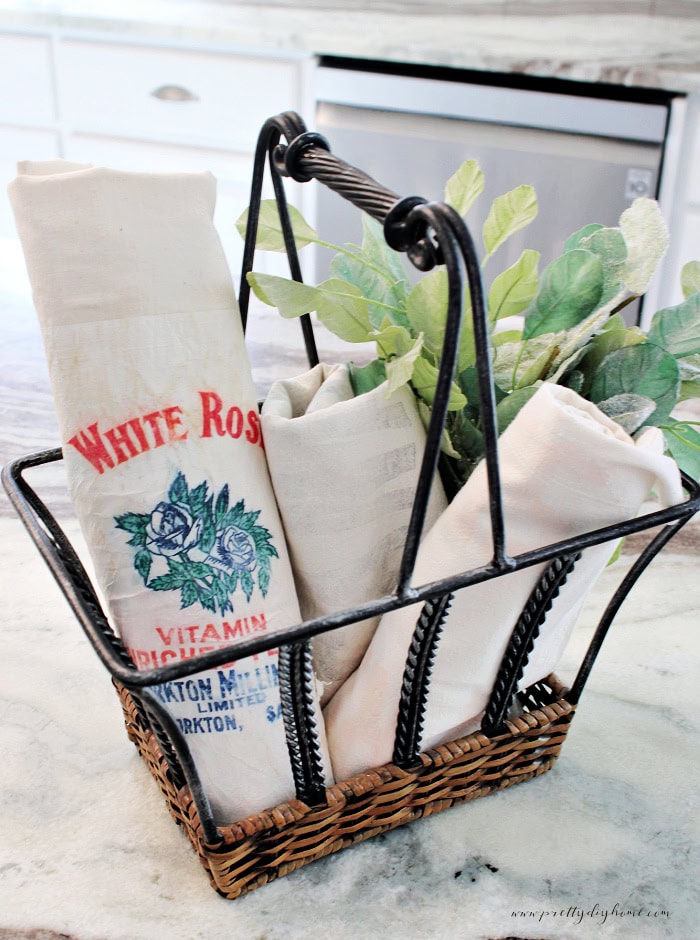
The more worn pieces, including the one I damaged while cleaning, still looked beautiful grouped together.
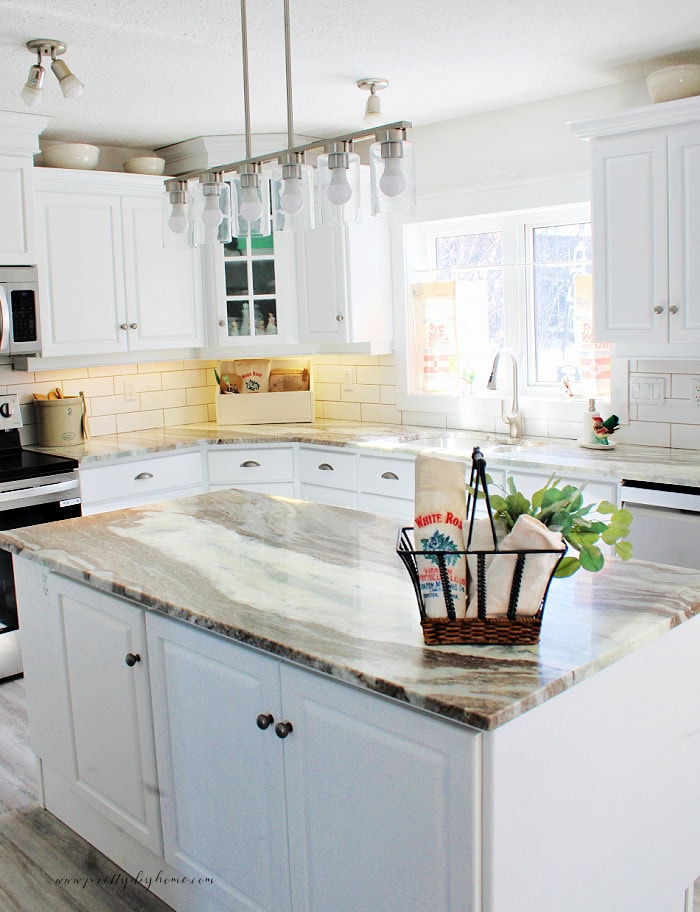
I rolled them up and placed them in a wire basket at the end of my kitchen island. It is a simple way to use even the older sacks and add a unique arrangement to the counter.
Used as Wall Art
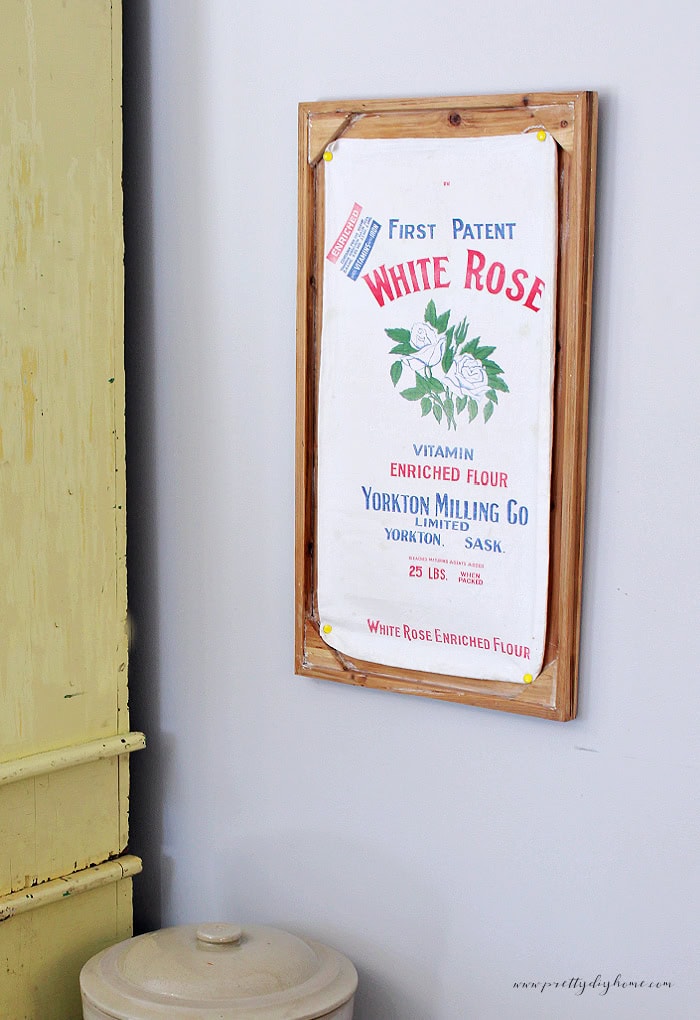
The last one is very special. It is a first patent flour sack from Yorkton, Saskatchewan, and during our trip, I actually saw the mill it came from. The mill is open as a museum, although it was closed for the winter when we visited.
This sack is in almost new condition, and as a first patent, it is likely quite old.
I used it as artwork, pinning it to a simple wood frame and hanging it in my dining room. It could be mounted more formally under glass. This was a quick and inexpensive way to display it and still enjoy it.
Preserving Vintage Textiles for the Future
I hope this post inspires you to keep an eye out for vintage flour sacks of your own. If you’re lucky enough to find them, they are a wonderful vintage fabric to collect.
Look for them at estate auctions, antique stores, flea markets, and vintage shops, especially in farming communities.
If you can’t find authentic flour sacks, you can use other vintage fabrics instead. Embroidered vintage table runners or tablecloths are beautiful for this, and I have done that as well.
For me, decorating with these sacks is a small way of honoring the women who knew how to make a pretty home using what they had.
If you love vintage kitchen decor, save this post for later. These simple flour sack ideas are easy to recreate and add character to your kitchen and dining areas.
You May Also Enjoy
Kitchen Countertop Organizer
If you like having everyday items styled and within reach, this simple DIY kitchen countertop organizer is perfect for layering decor while keeping things tidy and easy to use.

How to Paint Kitchen Cabinets
If you love this soft, bright kitchen look, you can see how I painted my kitchen cabinets white to create the perfect backdrop for vintage decor and styling.